CASH BAIL PROPOSALS AND BAIL REFORM ARE AT BEST PERFORMATIVE POLITICS AND A WORST A DISASTER. The position of the Criminal Lawyers’ Association follow.

Ontario’s latest bail review plan a political stunt that will be ineffective and come at a high cost to taxpayers Adam Weisberg & Tonya Kent

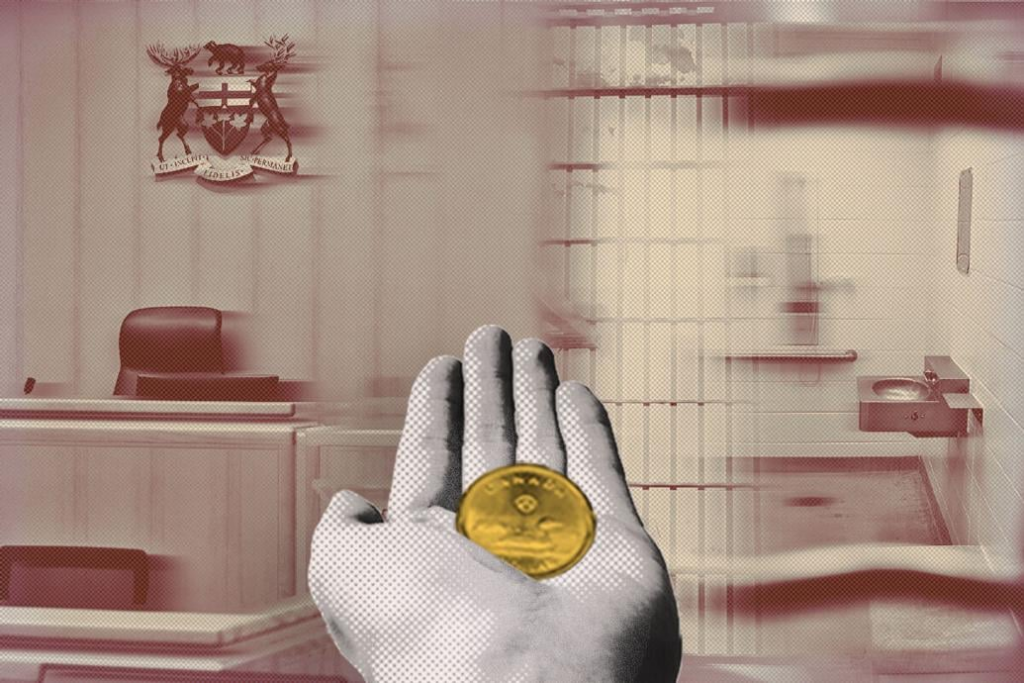
The Ontario government never seems to tire of pumping out proposed legislation that is long on crowd-pleasing optics and short on common sense. The province’s latest half-baked e ort in this direction is a law that will require bail sureties to deposit cash for a friend or family member to be released on bail. This legislation is a political stunt that will come at a high cost to taxpayers. It promises to be ine icient and, in all probability, unworkable. It will also unfairly target the working poor and marginalized members of our communities. In contrast, those who are better o will have no trouble putting up cash to enable their family members to continue attending school or work while they await their trial. Under our bail system, it is commonplace for people charged with a crime to require a surety before they can be released. These sureties are usually relatives, friends or employers who can pass a rigorous background check. They promise to supervise the accused person and prevent breaches of their bail conditions by pledging an amount of money. Should the accused breach a bail condition or be charged with another crime, the money pledged can be seized in a process is known as estreatment. In reality, however, the province puts little e ort or resources into estreating bail, so sureties rarely face the prospect of an estreatment hearing. All the government’s new ‘cash bail’ legislation would do is create a provincial o ence targeting sureties who fail to post the cash they had pledged once the accused is released. Provincial authorities then may or may not pursue a provincial o ence charge against the surety. Will these cash deposits cause potential sureties to shy away? Will predatory lenders fill the void? With remand centres already crammed beyond capacity, how will they house impoverished o enders who will no longer secure bail? Those who su er will inevitably be petty criminals, homeless people, the untreated mentally ill and drug addicts without supports. The cost of warehousing these people until their trial – with no e ective rehabilitation programming available – will be staggering. This supposed “cash bail” plan also will create thousands of new provincial o ences that will require more court time, more provincial prosecutors, and more Justices of the Peace. This glut will have a cascading e ect. Serious criminal charges that are not tried within a reasonable time will be tossed out. Flagrant o enders who ought to face trial will o er a prayer of thanks to Premier Doug Ford as their charges are quietly dropped. Players in the court system often find ways to work around unfair or impractical policies that are foisted on them. In this instance, it is easy to foresee that judges and justices of the peace will balk. Perhaps, more accused will end up being released without the watchful eye of a surety. Some may be released on “loonie bails” – a predictable work-around in which the cash deposit is fulfilled by the deposit of a dollar. Cash bail has also proved to be ine ective in other jurisdictions. New Jersey eliminated it in 2017 and replaced it with a system similar to what we currently have in Canada. There was no increase in gun violence over the ensuing three years. Similarly, New York removed their cash bail system for non-violent felony charges and misdemeanour charges several years ago. And our Supreme Court of Canada has long recognized that no-deposit bail has the same coercive e ect as a cash bail. Estreatment remains the most fair and e ective remedy for breaches of bail – but only when there are tangible consequences for failing to comply. Actual enforcement would put money in government co ers at the same time as it deters unworthy sureties. Our justice system is based on the premise that everyone is innocent until proven guilty; that everyone is entitled to reasonable bail where the risk is manageable. As with any system, mistakes will occasionally be made. Balanced against this, is the reality that people are falsely accused every day based on misconceptions, unreliable evidence or faulty identifications, The right to be presumed innocent should not be predicated on one’s income or ability to deposit cash.

In criminal law, the identity of a confidential informant is protected. But this case is also about unacceptable delay which results in charges being stayed. In my experience, a common cause of delay is caused by the police and the Crown not disclosing all of the evidence in a timely manner, which is not uncommon. As reported by The Star:

Arson case tossed after Crown outs confidential informant. Toronto judge calls prosecution ‘amongst the worst I have ever encountered’
“Inadvertently revealing confidential source information is one of the most serious errors Crown counsel can make,” Ontario Court Justice Brock Jones wrote.
Dec. 3, 2025
3 min read

“The Crown, and the Crown alone, bears responsibility for this prosecution falling apart.”
Andrew Francis Wallace/Toronto Star
Jacques-Gallant
By Jacques GallantCourts and Justice Reporter

For the second time in two months, the Crown’s inadvertent disclosure of information about a confidential informant has contributed to the collapse of a Toronto criminal case.

The prosecution’s error came to light in the case of a man accused of arson, which was tossed due to delay in a ruling excoriating the Toronto Crown attorneys’ office.

“The unnecessary delay that accumulated in this case was entirely due to the Crown’s failure to effectively manage the prosecution and to provide the disclosure materials in a timely manner,” wrote Ontario Court Justice Brock Jones.

“The pace of disclosure in this case and the Crown’s handling of its own file is amongst the worst I have ever encountered.”
Prosecutors outed a confidential informant. Now, a Toronto judge has tossed ‘very serious’ charges — and two people are in ‘grave danger’

Prosecutors outed a confidential informant. Now, a Toronto judge has tossed ‘very serious’ charges — and two people are in ‘grave danger’

The Crown had accidentally shared information that could identify a confidential source in materials disclosed to the defence, which it then had to claw back after realizing its error, resulting in additional delay to a case already plagued by issues.
“Inadvertently revealing confidential source information is one of the most serious errors Crown counsel can make,” Jones wrote. “However it happened, it was a serious failure on the part of the Crown’s office and added to the mounting disclosure problems in the prosecution.”

Jones cited a Toronto case in the Superior Court of Justice first reported by the Star last month, in which a judge tossed an individual’s unspecified “very serious charges” after the Crown inadvertently revealed that their relative was a confidential informant, putting both in “grave danger” of being killed. The two were told to immediately go into witness protection.

There was no indication that the accused before Jones was a confidential informant — the Star isn’t naming him as he is no longer facing criminal charges — but rather the police appeared to rely on the information of a confidential source as part of their investigation.

The accused man was facing an arson charge in relation to a fire set at a downtown bar; one of his lawyers, Alison Craig, said he had been in custody since his June 2024 arrest because he didn’t have family or friends who could act as sureties — individuals who promise to the court that they’ll ensure the accused abides by their bail conditions.

“He has maintained his innocence since day one, and it was quite frankly heartbreaking to visit him repeatedly and tell him that there had been no movement on his case because the disclosure was so delayed,” said Craig, whose co-counsel, Sigma Khan, argued the delay application before Jones.

Craig said the inadvertent disclosure of information about confidential informants by the Crown is becoming a growing issue, mentioning that in a few of her cases, she’s received an email from the prosecutor hours or days after receiving disclosure asking her to destroy it.

“I do not know what is causing this to be a more common problem, other than perhaps overworked Crown offices,” she said.

The Supreme Court of Canada has said that cases in provincial court must be completed within 18 months or they must be tossed for violating an accused person’s constitutional right to a trial within a reasonable time, unless the Crown can show there were exceptional circumstances for the delay, with delays on the side of the defence deducted from the calculation. The top court also left the door open to tossing cases below the 18-month ceiling, in certain circumstances.

The accused conceded that about three months of delay in his case was defence-related. His trial was anticipated to conclude in March 2026, which would put it over the ceiling, but the Crown said it believed the trial could be completed below the ceiling by the end of January. Regardless of whether the case was over or under the ceiling, Jones said it had to be tossed.

Despite “multiple requests” by Craig, the Crown was slow in disclosing materials to the defence, the judge said. He also criticized the assigned prosecutor at the time for the “unprofessional error” of failing to show up at two judicial pre-trial hearings, which is where the Crown and defence work out trial issues with a judge and discuss missing disclosure items.

Initial disclosure wasn’t received until six months after the man’s arrest, and “significant items” remained outstanding for a year, even though they would have been in the police’s possession since the arrest, Jones wrote. The Crown then dropped “several gigabytes” of material on the defence this past July.

“When the Crown fails to act with the degree of professionalism and due diligence that must be demanded of any criminal prosecution, it is responsible for the adverse outcomes that will inevitably follow,” the judge wrote.

All of the materials should have been disclosed within two to three months of the arrest, Jones said, but no explanation was provided for the delay.

“I conclude that as the disclosure problems associated with (the) prosecution grew, careless mistakes were being made,” Jones wrote. “The Crown, and the Crown alone, bears responsibility for this prosecution falling apart.”

COULD I BE MORE PROUD OF MY SON? Not really.

Kelly

A Truly Exceptional Criminal Defence Lawyer – Mr. David Reeve
This past year, our family lived through one of the most stressful experiences imaginable. Our son faced devastating accusations—claims that, if not handled properly, could have altered the entire trajectory of his life. Then we met Mr. David Reeve.
From the very beginning, Mr. Reeve treated our case with the utmost seriousness, professionalism, and compassion. He accepted our Legal Aid certificate, yet never once made us feel like our case was anything less than a priority. His attention to detail was extraordinary. He remembered every fact, every date, every witness interview —we never had to repeat anything. His memory, organization, and commitment were truly remarkable.
Throughout the process, Mr. Reeve tried hard to work with the Crown Attorney, presenting clear facts and strong legal arguments in an effort to have the charges withdrawn. When the case ultimately proceeded to trial, he made sure we secured the earliest court dates possible, minimizing the emotional toll and uncertainty on our family.
He was consistently easy to reach, quick to respond, calm, reassuring, and professional. Not once was he late for a meeting or court appearance. Every interaction with him left us feeling supported and confident that we were in the best possible hands.
In the courtroom, Mr. Reeve was outstanding. He was precise, focused, and well-prepared. His submissions were organized and backed by solid evidence, page references, and clear logic that made it easy for the judge to follow and understand the truth. His cross examination questions were focused. His note-taking was meticulous, and his overall presence was composed, articulate, and commanding without ever being aggressive.
It was also clear that Mr. Reeve is highly respected by his peers. On several occasions, we heard fellow lawyers and courtroom staff speak of him with genuine admiration—something that only reinforced the confidence we already had in him.
Because of Mr. Reeve’s unwavering dedication, professionalism, and expertise, our son was found innocent, and he now has his future back. Words cannot fully express our gratitude.
If you are looking for a criminal lawyer who is ethical, compassionate, humble, razor-sharp, and truly committed to his clients, we cannot recommend Mr. David Reeve enough. He is, without question, the very best.

WHAT IS AN “INTIMATE IMAGE” IN THE DAYS OF PHOTO MANIPULATION AND AI?

Distributing a fake nude of your spouse is ‘morally reprehensible’ — but not a crime under Canadian law, Ontario judge warns
“It is not her nude body and, it is not her breasts,” the judge wrote, explaining why the Criminal Code does not apply.

Nov. 5, 2025

A Burlington judge recently acquitted a man accused of sending intimate images of his wife to an unknown man without her consent.

Andrew Francis Wallace/Toronto Star
Jacques-Gallant
By Jacques GallantCourts and Justice Reporter
Distributing fake nude images of a real person without their consent may be “morally reprehensible and, frankly, obscene,” but it’s not a crime, a Burlington judge has ruled.

In a case that one expert says highlights the urgent need for Parliament to expand the definition of intimate images in the Criminal Code, Ontario Court Justice Brian Puddington acquitted a man accused of sending pictures of his wife without her consent to an unknown man via Snapchat.

The woman was clothed in some of the photos, but in one, she was wearing only a bra in her bathroom, while in another, her face was “digitally manipulated” and placed on top of a naked body that was not hers.

Neither the bra photo nor the fake met the Criminal Code definition of an intimate image, Puddington found, which is that the person must be nude, exposing his or her genital organs, anal region or breasts, or engaged in sexual activity.

The case is the latest example of a grey area in Canadian law around so-called deepfake images, where Photoshop or AI tools can be used to create convincing nude images of almost anyone, often with little time or skill involved.

A boy created AI-generated porn with the faces of girls he knew. Why Toronto police said he didn’t break the law
Star Exclusive
A boy created AI-generated porn with the faces of girls he knew. Why Toronto police said he didn’t break the law
In the fake photo, “it is not her nude body and, it is not her breasts — both of which are necessary to meet that definition,” Puddington wrote in his October ruling (emphasis his.)

“If this type of photo were meant to be captured by this section, Parliament would have specifically done so … This is not to say that a fake image does not cause harm and embarrassment, but that harm is not captured by the current provisions.”

And the bra photo, in which there was scribbling over the woman’s face, also failed to meet the definition because while it “shows a significant portion of her breasts,” they are not exposed as she is wearing clothing, the judge found, while nevertheless stating that sharing a photo of someone in their underwear without their knowledge is “disgusting and disgraceful.”

Puddington granted the defence’s application for a directed verdict, meaning he concluded at the end of the Crown’s case that they had failed to present sufficient evidence to support the charge, and it wasn’t necessary to hear closing submissions and for the defence to decide if they wanted to call evidence.

In acquitting the accused man, no final determination was made as to whether he had sent the photos, which his daughter testified she had found on a Snapchat account on his phone. The decision also does not specify a motive for why he allegedly shared the images.

“Nothing in these reasons should be read as saying that (the complainant) did not experience an embarrassing and humiliating event,” Puddington wrote. “The fact remains that the photos somehow exist, and (she) had to endure viewing and describing them in a courtroom full of people. Those photos may have also made their way into the public domain. She was emotional in court, and rightfully so.

“While I am sympathetic to her, that sympathy cannot play any role in my judgment. I must apply the law dispassionately, and not try to shoehorn images into a definition simply because I find the photographs deplorable.”

The proliferation of digitally altered photos and AI-generated pornography appropriating someone’s likeness “is a clear growing problem and Parliament needs to act,” said lawyer Gillian Hnatiw, who specializes in gender-based violence cases and was not involved with the matter before Puddington.

“Yes, I do think Parliament needs to expand the definition” of intimate images, she said. “Feminist legal scholars have been sounding the alarm about this for some time.”

As Puddington noted in his ruling, the previous Trudeau government did introduce an expanded definition in its Online Harms Act, to include an image “that falsely presents in a reasonably convincing manner a person as being nude.” The bill died on the order paper following the prorogation of Parliament earlier this year and subsequent federal election. The Carney government has not yet reintroduced a similar bill.

The issue of deepfake porn made headlines last year after pop star Taylor Swift threatened legal action over a series of pornographic fakes that were viewed millions of times before they were taken down.

Meanwhile, some jurisdictions are floating aggressive changes to the law in response. Denmark, for example, has proposed cracking down on AI-generated deepfakes by expanding its digital copyright laws to include a person’s features or voice.

“This is a facet of gender-based violence, which is endemic,” Hnatiw said, “and until the law starts to take these forms of violence/coercion/intimidation seriously, they will continue.”

So, you get a Highway Traffic Act ticket. You hire and pay a paralegal to “take care of it”. The paralegal pleads you guilty, files a bogus appeal and does nothing more. How would you feel?

From The Star:
“According to the judge’s decisions, Mocanu or an associate paralegal would enter a guilty plea to the HTA offence, or a lesser charge. Shortly after, they would file an appeal that stated their client was not guilty or wanted a new trial, or that vaguely asserted the reasons for the appeal would be revealed by transcripts of the court proceedings. However, transcripts were never filed as part of the appeals.
Provincial regulations mandate that convictions and demerit points aren’t recorded on driving records until a conviction is “sustained on appeal.” So as long as the appeals were before the courts Mocanu’s clients wouldn’t face penalties.

“POLITICIANS CAN NEVER RESIST THE URGE TO TURN A MESSY LEGAL CASE INTO A CHEAP POLITICAL PROP” This refers specifically to DOUG FORD and PIERRE POILIEVRE. But then, the lack of knowledge of the facts never restrains their political proclamations. Michael Spratt explains:

“Ford wasted no time calling the justice system “broken,” thundering that, “You should be able to protect your family when someone’s going in there to harm your family and your kids.” Poilievre chimed in with his tough-on-crime poetry, demanding clarity in the law. Kevin Vuong, a former Conservative member of parliament, solemnly declared that people should be allowed to use “reasonable force” to defend themselves.

How do we know this outrage is performative grievance and not genuine concern? Because the law already does precisely what they claim it doesn’t. And here’s the kicker: Poilievre should know this better than anyone. The Conservatives rewrote the self-defence provisions in 2012. Poilievre voted for them. Now he’s out pretending that the law he championed is some sinister Liberal plot against homeowners. That takes an Olympic-level memory lapse or a strong commitment to gaslighting.

Undermining the public’s understanding of the law, stoking unnecessary fear, and floating castle laws for a few cheap political points do more than distort reality. They corrode trust in the justice system, leave people confused about their rights, and feed the false belief that Canadians are helpless against crime. That may be good politics for Ford and Poilievre, but it is spinless and reckless leadership.”

https://www.canadianlawyermag.com/news/opinion/castle-laws-wont-fix-what-ford-and-poilievre-claim-is-broken-in-self-defence-rules/393014?fbclid=IwY2xjawMpN5BleHRuA2FlbQIxMQBicmlkETE4azFmRFk0VFlXZjlPSml0AR6KV6zGT1HcQuwIPIcD0TfVaF0XOz9I97jmeavWI0Kj0-F6dX9MevHEEXsYhg_aem_6EFz9v4DhZBVGakGYYvNvw

THE DIRTY TRICK OF SPEED CAMERAS – It’s about making common conduct an offence for money. Their real purpose is to raise revenue and not to increase safety. The fact is that posted speed limits are not calibrated to the speed of the flow of traffic and are not intended to be strictly enforced. Travelling at or below the speed limit is usually, in practical terms, dangerous. (Try it some time.) Speed camera thresholds do not accommodate reality.

THIS APPLIES EQUALLY TO DANIELLE SMITH AND PIERRE POILIEVRE AS IT DOES TO DOUG FORD

Opinion | Doug Ford either doesn’t know what self defence means — or he doesn’t care

Aug. 28, 2025

2 min read

Premier Doug Ford has undermined the police for applying the law to the facts as they came to understand them through their investigation, Reid Rusonik writes.

Carlos Osorio The Canadian Press


By Reid Rusonik, Contributor

Reid Rusonik is a defence lawyer practicing in Toronto 

So Premier Doug Ford has had enough with the law against excessive force in self defence, has he?

He believes the Lindsay man facing charges of aggravated assault and assault with a weapon after an intruder broke into his home should not have been charged for his having “(given) him (the intruder) a beating.” People are done” with criminals being treated leniently and leaving punishment up to “some bleeding heart judge,” Ford has said.

‘Something is broken’: Doug Ford speaks out on charges laid against Lindsay resident after intruder allegedly assaulted

With his comments, Ford has indirectly undermined the police for laying the charges — for applying the law to the facts as they came to understand them through their investigation.

In doing that, he not only undermines his supposed ‘tough on crime’ agenda — something he has already done by grossly underfunding the criminal justice system — he demonstrates either a shocking ignorance of the law or a contempt of it.

The reality in Canada is that you can defend yourself in your home. You can use force. You can even do so with weapons, including knives and legally possessed firearms. We already have a ‘Castle Law’.

What you cannot do is use excessive force to defend your home, although the law is pretty lenient in that regard by not requiring the person defending themselves to measure the force they employ “to a legal nicety.” The only thing the law will not tolerate is excessive violence on the part of the homeowner, where their actions move from self-defence and defence of home to gratuitous punishment.

At this point, no one other than the intruder and the accused and the police know what force the accused employed here, although the charges suggest he used something like a knife and that he wounded the intruder and that he did so in a manner that, beyond any legal nicety, was gratuitous. Ford did not know the facts when he made his comments, nor should he have, nor should anyone else until the police provide their investigation to the Crown and the Crown to the accused’s lawyer.

The only thing Ford knew was that he did not know the facts, but that apparently did nothing to stop him from trying to make cheap political points with a base either equally unaware of the law or equally in contempt of it.

As for his attack on the judiciary, what Ford does know is that the bench must either be full of his kind of judges and justices of the peace — his government has been appointing them for the last seven years — or he does not believe his criticisms of the judiciary are well-founded.

All of his remarks in regard to this case are those of the worst kind of political opportunist and of the poorest kind of leader for a constitutional democracy.

Free societies guaranteed by constitutional democracy are not easy because society is not easy. The rule of law is the only thing that makes them possible. Leading them is a job for honest, thoughtful, intelligent people who know the law and wait for and act on the facts, regardless of how unpopular that may be for a time, and regardless of the chance to score cheap political points.

What’s next for Ford? Calling for the police and members of the public to be allowed to use excessive force to make arrests? A little “street justice?” That would mark the end of our society in anything but name.

Ford might consider instead looking at the damage his cuts to education, addiction treatment and other social programs have done in leading people to untreated drug addiction, far and away the number one cause of break and enters and the most common characteristic of the perpetrators of the crime.